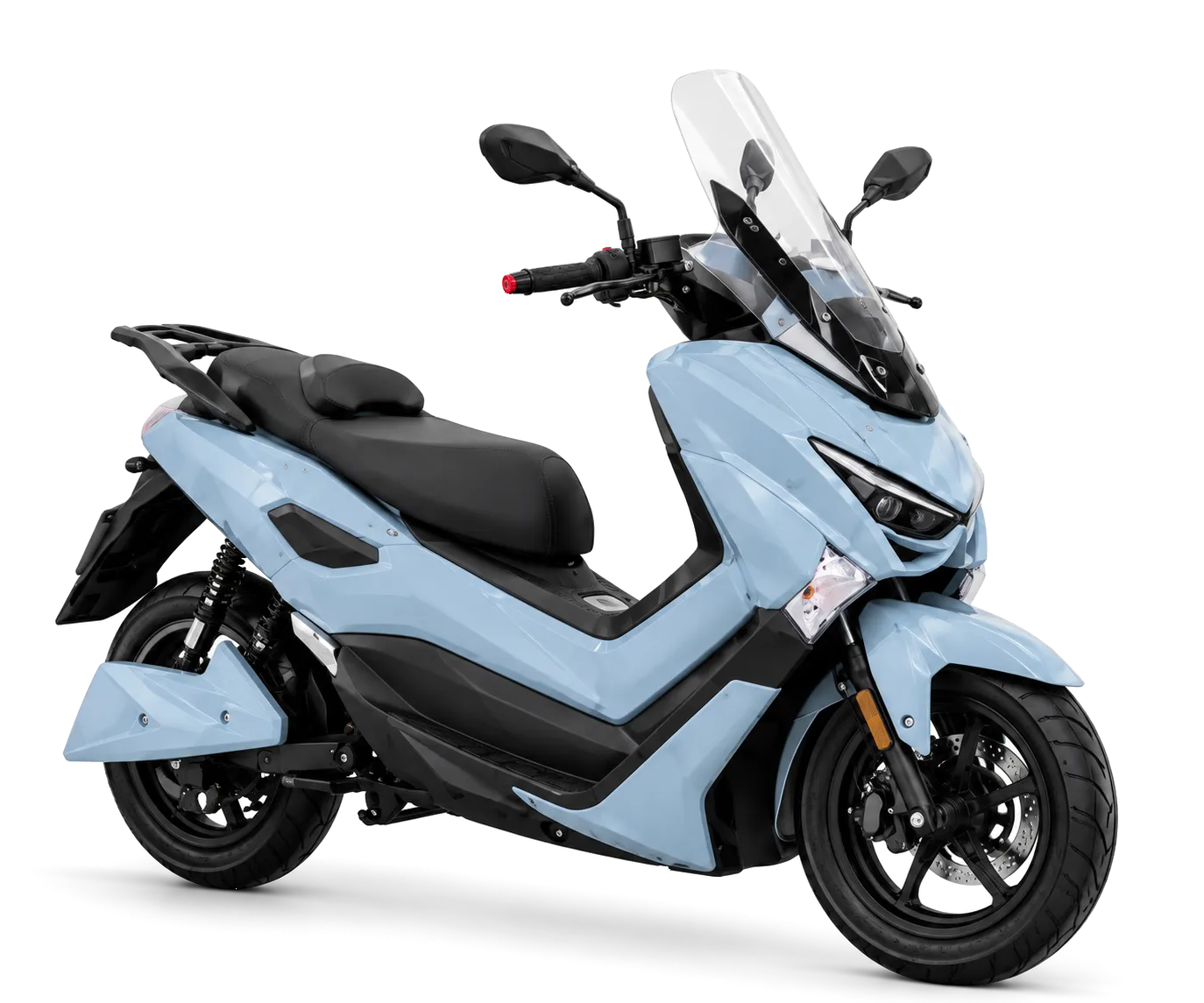
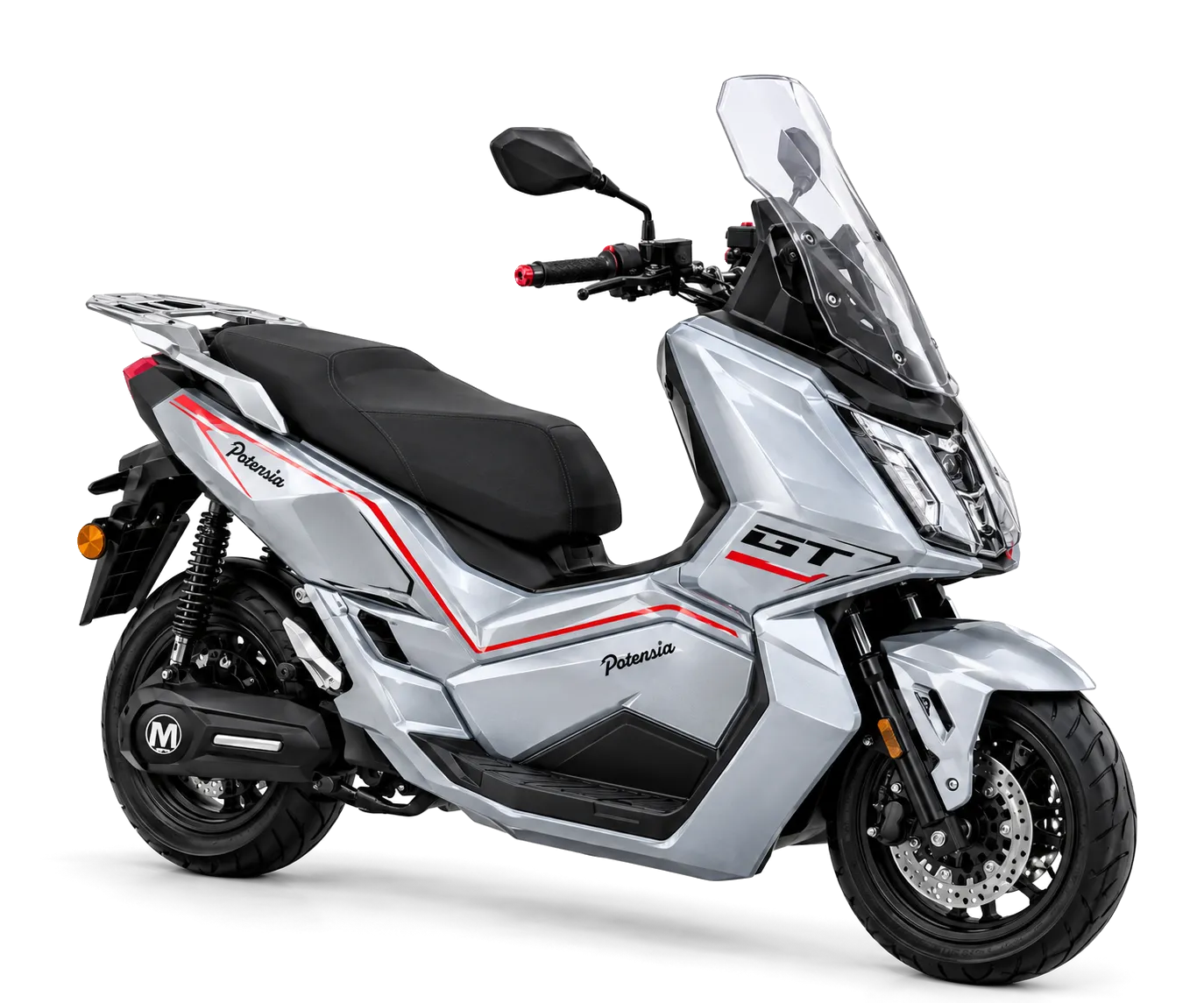
Electric motorcycle or petrol scooter: which costs less to run? The answer comes down to a few simple numbers, as long as they are laid out clearly. Here is the running cost per kilometre of a Potensia electric motorcycle, a petrol scooter and a car, worked out with the same assumptions as the calculator on our site, then applied to a typical commute.
The assumptions
Every figure in this guide rests on the assumptions below. They are estimates: adjust them to your own case.
- Unleaded petrol: 46 DA per litre.
- Electricity: 5 DA per kWh, household tariff.
- Potensia electric motorcycle: 3 kWh per 100 km, plus 0.30 DA of servicing per km.
- Petrol scooter: 2.8 litres per 100 km, plus 1.20 DA of servicing per km.
- Car: 7 litres per 100 km, plus 3 DA of servicing per km.
The servicing figure is an average per kilometre: it spreads the cost of routine servicing and wear parts over the distance you ride.
Electric motorcycle, scooter, car: the cost per kilometre
Electric motorcycle
3 kWh per 100 km is 0.03 kWh per km. At 5 DA per kWh, energy costs 0.15 DA per km. Add 0.30 DA of servicing and you get 0.45 DA per km, or 45 DA per 100 km.
Petrol scooter
2.8 litres per 100 km is 0.028 litres per km. At 46 DA a litre, fuel costs 1.288 DA per km, about 1.29 DA. Add 1.20 DA of servicing and the total comes to about 2.49 DA per km, or nearly 249 DA per 100 km.
Car
7 litres per 100 km is 0.07 litres per km, or 3.22 DA of fuel. Add 3 DA of servicing and a car costs 6.22 DA per km, or 622 DA per 100 km.
Per kilometre, then, the electric motorcycle costs about 5.5 times less than the petrol scooter, and nearly 14 times less than the car.
Worked example: 24 km a day, 5 days a week
Take a typical commute: 12 km there, 12 km back, Sunday to Thursday. That is 24 km a day and 120 km a week. Over 52 weeks you ride 6,240 km a year, or 520 km a month on average.
| Vehicle | Per day (24 km) | Per month (520 km) | Per year (6,240 km) |
|---|---|---|---|
| Potensia electric motorcycle | 10.8 DA | 234 DA | 2,808 DA |
| Petrol scooter | 59.7 DA | 1,294 DA | 15,525 DA |
| Car | 149.3 DA | 3,234 DA | 38,813 DA |
These amounts include energy and servicing. Broken down:
- Electricity alone: the bike uses 0.72 kWh a day, which is 3.60 DA a day and 78 DA a month. Estimated servicing adds 156 DA a month.
- Petrol alone: the scooter burns about 0.67 litres a day, which is 30.90 DA a day and about 670 DA a month. Estimated servicing adds 624 DA a month.
- The saving: just over 1,050 DA a month compared with the scooter, or about 12,700 DA a year. Compared with a car, about 3,000 DA a month and 36,000 DA a year.
What if you ride more?
Cost follows distance. At 50 km a day, 6 days a week (a delivery rider, or a long commute in from the suburbs), you cover about 1,300 km a month (50 × 6 × 52 ÷ 12):
- electric motorcycle: about 585 DA a month;
- petrol scooter: about 3,234 DA a month;
- car: about 8,086 DA a month.
The gap with the scooter then passes 2,600 DA a month. For this kind of riding, the Heroic Warrior III and its 120 km maximum range leave the most margin.
For your own commute, multiply your monthly kilometres by 0.45 DA (electric), 2.49 DA (scooter) or 6.22 DA (car). That gives you an estimate of your monthly running cost.
Less servicing, fewer trips to the garage
Part of the gap comes from servicing. A petrol scooter needs an oil change every 2,000 to 3,000 km, plus spark plugs, filters and a drive belt. A Potensia has no engine oil, no spark plug and no belt: over its first 10,000 km it visits the workshop three times, and the first visit is free. The full schedule is on our service and warranty page.
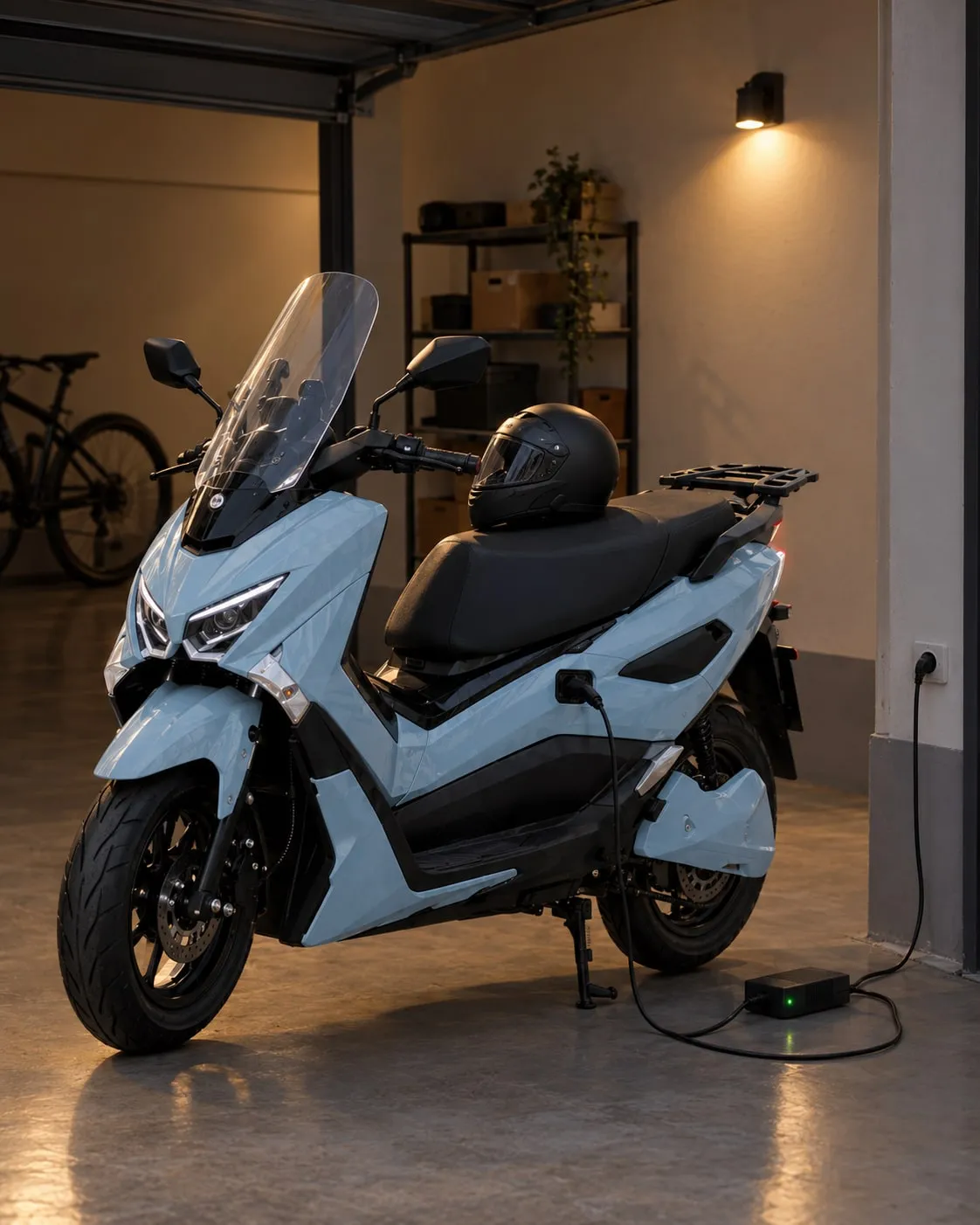
On the energy side, a full charge costs less than 20 DA with these assumptions: the figures for each model are in our guide to charging an electric motorcycle at home.
What this calculation leaves out
An honest calculation has its limits. Keep in mind that:
- it leaves out the purchase price, insurance, registration and gear. All of these are covered in our guide to electric motorcycle prices in Algeria;
- petrol and electricity prices can change, and your real tariff is on your electricity bill;
- real-world range, and so consumption, varies with load, speed, temperature and terrain;
- a battery slowly loses capacity over the years. It is covered for 3 years, and replaced if its capacity drops below 70% in that time.
Do the maths on the road
Numbers give you an idea; a test ride gives you the answer. Book a test ride: an advisor walks you through the controls, you ride at your own pace, and you can ask anything about charging and running costs. For a quick question, message us on WhatsApp or through the form on our contact page.