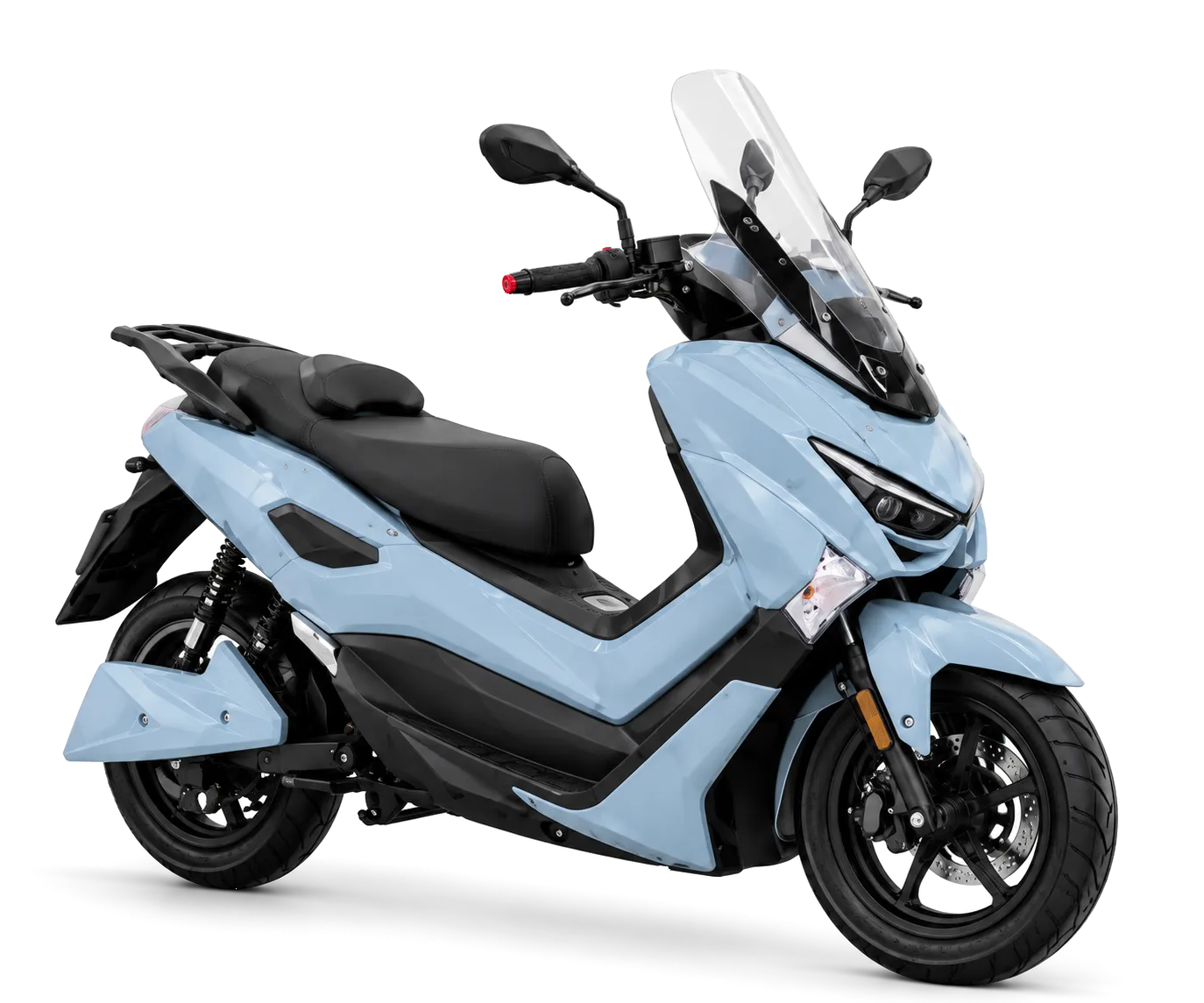
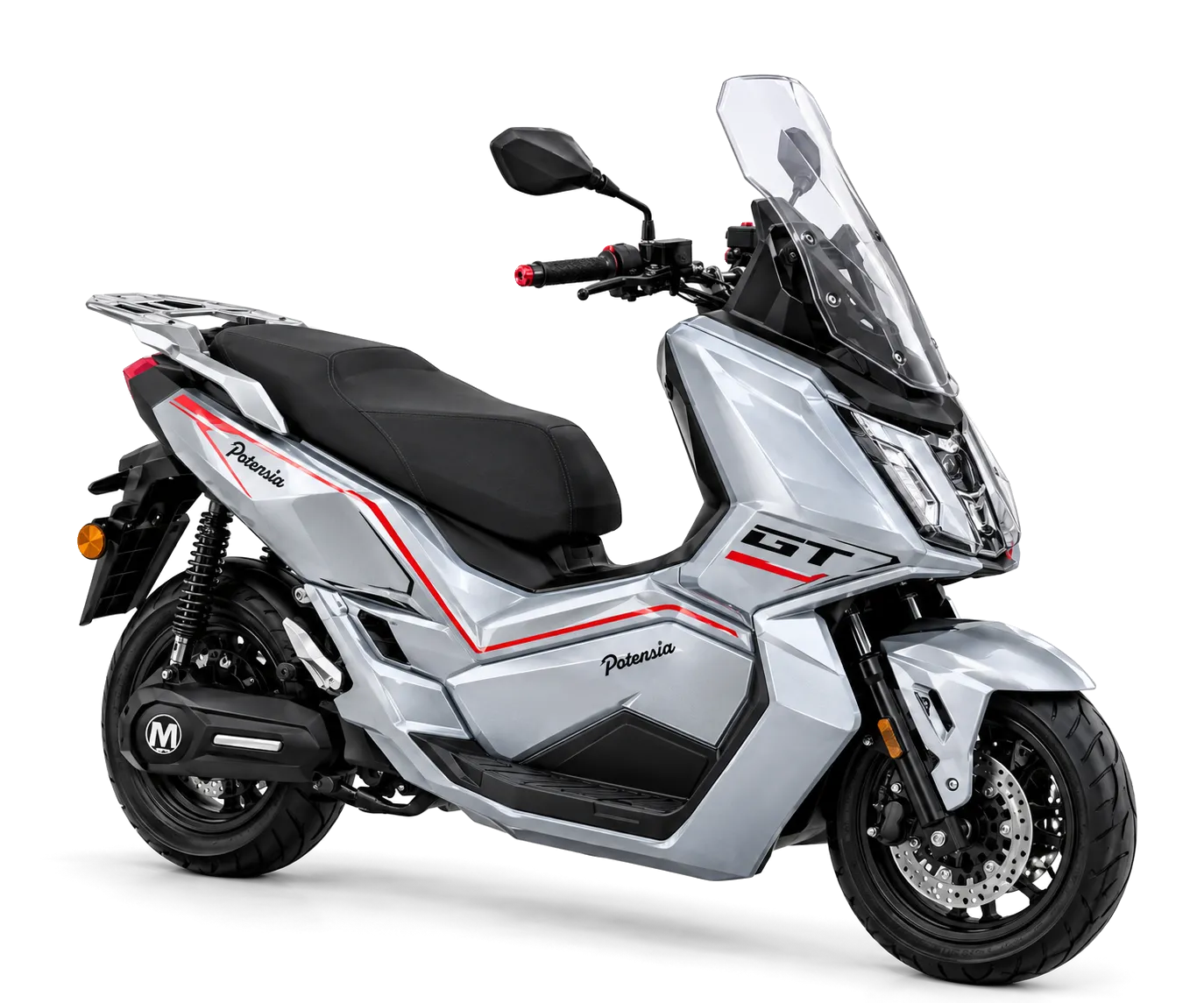
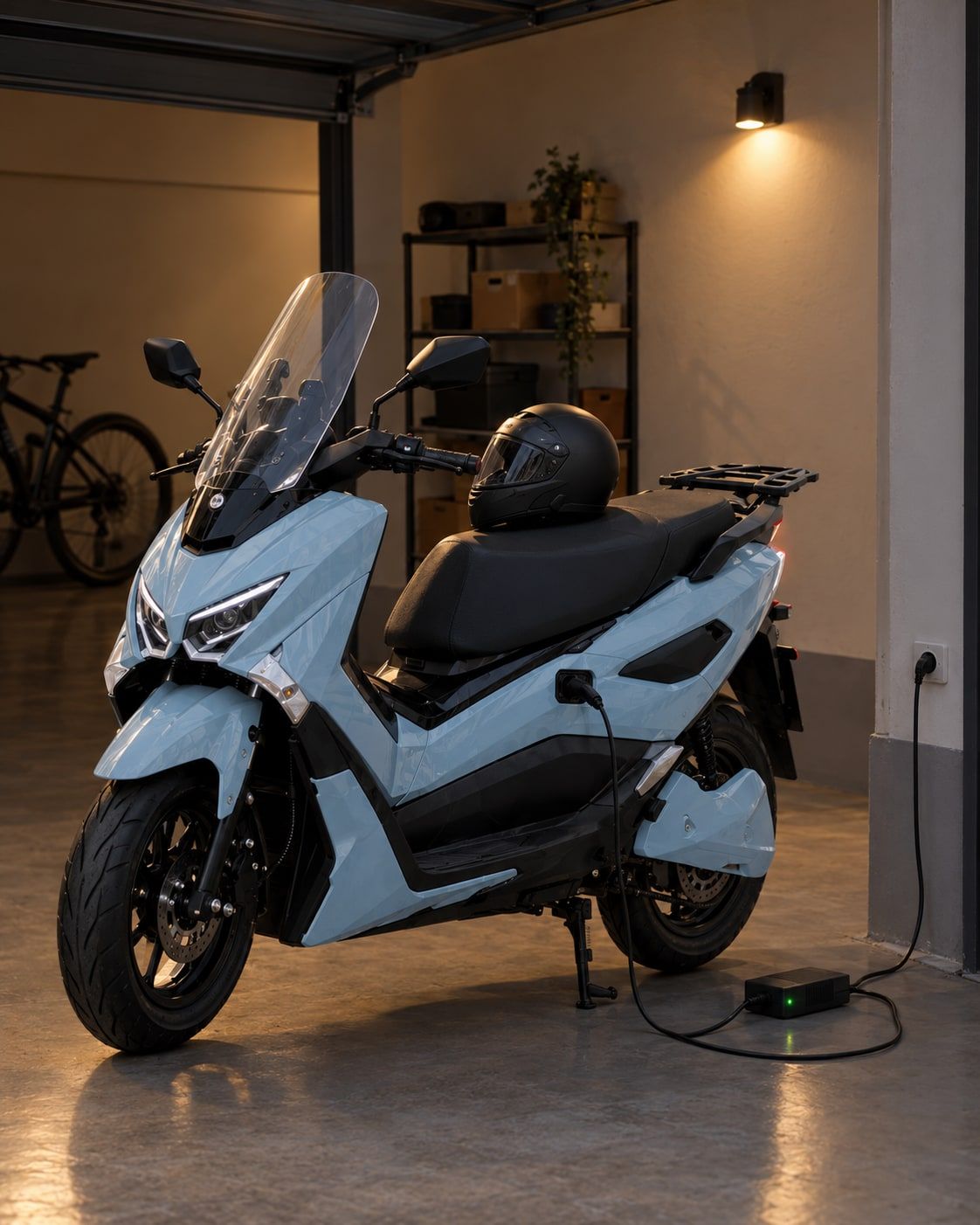
Charging an electric motorcycle at home is simpler than most people think: no charging point to install, no station to look for. A Potensia charges from an ordinary 220 V socket, with the supplied charger, overnight. Here is how long it takes for each model, what a full charge costs, and the habits that keep the battery healthy for years.
A 220 V socket and the supplied charger
Every Potensia comes with its own charger. It plugs into any 220 V socket: in your garage, your courtyard or your workplace. No wallbox, no special installation.
Two simple rules:
- always use the supplied charger. Another charger can damage the battery and void the warranty;
- plug it into a wall socket in good condition, out of the rain.
Live in a flat with no garage? You need a socket within reach of where the bike spends the night. Bring it up during your test ride and we will work out the most practical setup for your home with you.
How long does it take to charge an electric motorcycle?
Charge time depends on each model’s battery:
- F1: 2.16 kWh lithium battery (72V, 30Ah), full charge in 6 to 8 hours.
- Heroic Warrior III: 3.6 kWh LiFePO₄ battery (72V, 50Ah), full charge in 5 to 6 hours.
- T11: the same 3.6 kWh LiFePO₄ battery, full charge in 5 to 6 hours.
In practice, plug in when you get home in the evening and the battery is full by morning. To see what sets lithium and LiFePO₄ apart, visit our technology page.
Do you need to charge every night?
Not necessarily. With a 24 km daily round trip, the F1’s maximum range (100 km) covers 4 days of riding, and the Heroic Warrior III or T11 (120 km) covers 5. Real-world range does depend on load, speed, temperature and terrain, though. Keep a margin, and plug in as soon as what is left won’t cover tomorrow’s ride.
How much does a full charge cost?
With electricity estimated at 5 DA per kWh on the household tariff:
- F1: 2.16 kWh × 5 DA = 10.80 DA, so about 11 DA for a full charge;
- Heroic Warrior III and T11: 3.6 kWh × 5 DA = 18 DA for a full charge.
In other words, under 20 DA for a full battery that takes you up to 100 km on the F1, or up to 120 km on the Heroic Warrior III and T11.
These amounts are estimates. A charger always loses a little energy while charging, and your real tariff is on your electricity bill. The full comparison with petrol, per day and per month, is in our guide to electric vs petrol scooter running costs.
Five habits for a battery that lasts
Heat is a battery’s main enemy, and our summers are long. These habits keep yours healthy for years, from the coast to the highlands.
In summer, charge in the shade
Park in a garage or in the shade to charge. In direct July sun, a battery charges more slowly and ages faster.
Let it cool after a hot ride
After riding in the heat, wait about 30 minutes before you plug in.
Every day, the supplied charger and nothing else
It plugs into any normal 220 V socket. Another charger can damage the battery and void the warranty.
Going away? Store it between 50% and 80%
Leaving the bike for a few weeks? Leave the battery between 50% and 80%: not full, not empty.
In winter, expect a little less range
On cold mornings in Sétif or Batna, range drops a little. That is normal: it comes back as the battery warms up.
A battery covered for 3 years
The battery is covered for 3 years, cells and battery management system (BMS) included. If its capacity drops below 70% in that time, it is replaced. The charger supplied with the bike is covered for 1 year. Every year, a written report tells you your battery’s capacity: worth keeping, or showing to a buyer if you sell the bike. Full details are on our service and warranty page.
See the charger up close
Want to see the charger and talk through your setup, whether it is a garage, a courtyard or a flat? Book a test ride: we will take the time to answer your questions about charging, range and everyday use. For a quick question, message us on WhatsApp or through the form on our contact page.